

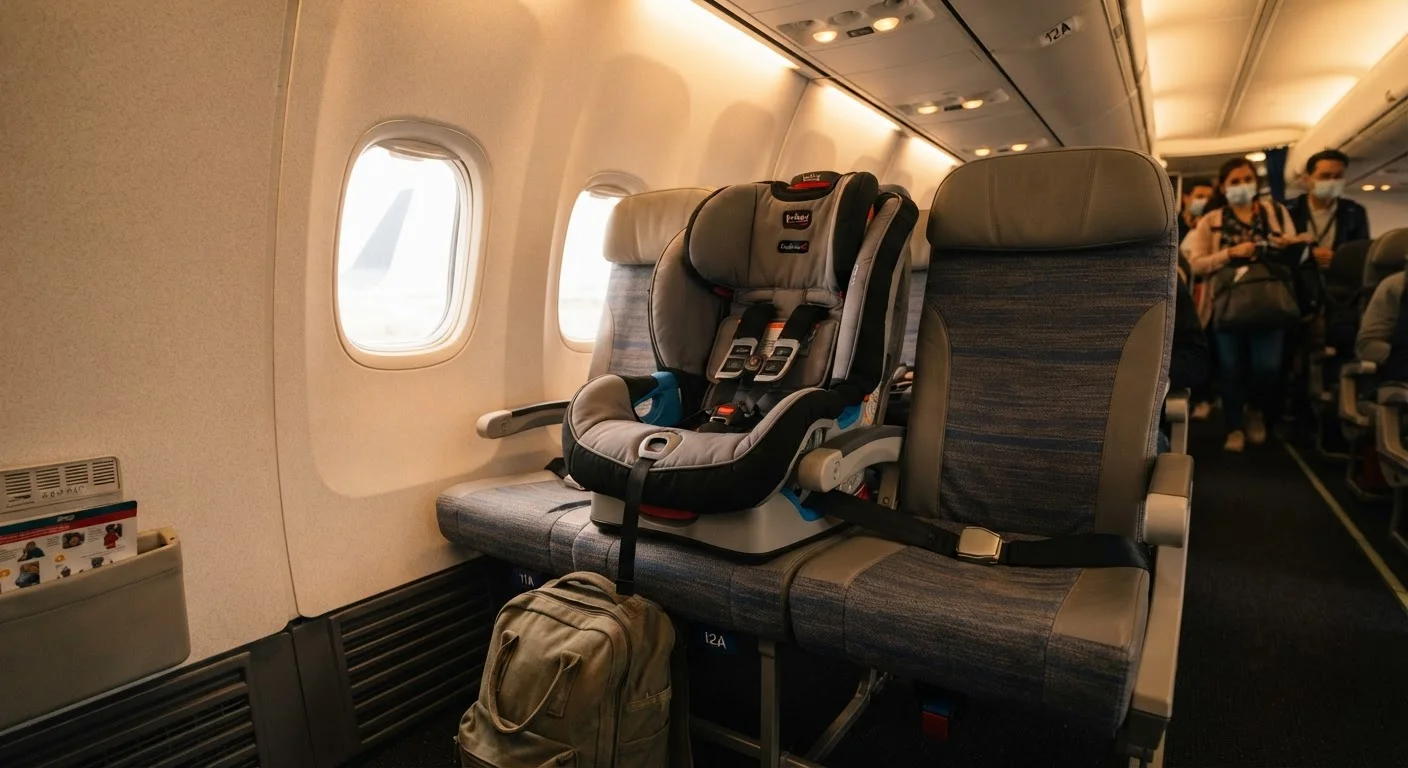
What the FAA Actually Requires
The Federal Aviation Administration (FAA) does not legally require children to use a child restraint system (CRS) on commercial flights — but it strongly recommends one. Children under 2 may legally fly as a lap infant, held by an adult, without their own seat ticket. However, the FAA's official guidance acknowledges this is not the safest option and encourages parents to secure a separate seat and approved CRS for any child small enough to need one.
To be used on an aircraft, a CRS must carry the label: "This restraint is certified for use in motor vehicles and aircraft." This language is the key indicator. Many seats carry it; some older or foreign-market seats do not. Check the label before you fly — not at the gate.
The FAA also approves the CARES harness (Children's Aviation Restraint System) as an alternative for children between 22 and 44 pounds who can sit upright. Booster seats are not approved for aircraft use, as they require a vehicle's shoulder belt to function safely.
For a broader look at how car seat rules apply every day on the road, see our complete guide to driving safely with young children.
Airline Policies vs. Federal Rules
Airlines can set policies that go beyond FAA minimums. A few things to know:
- Seat width matters. Most economy seats are 17–18 inches wide. Larger convertible seats may not fit, especially in a middle seat. Check your seat's width against the aircraft seat width — airlines often post this by aircraft type.
- Forward- vs. rear-facing. Airlines generally permit both orientations if the CRS label is correct, but confirm directly with your carrier, as policies occasionally vary.
- Gate-checking a CRS. If you choose not to use your CRS onboard, most airlines allow you to gate-check it at no charge. Use a protective bag to reduce damage risk.
Always verify current policies with your specific airline before departure. Rules can change, and what applied on your last trip may not apply today. For more practical strategies when traveling with young children, our article on flying with toddlers on long flights covers what parents have found most helpful.
Confirm Rules Before Every Trip
Airline policies and FAA guidance are subject to revision. Always check the FAA's official website and your carrier's current CRS policy before travel — not just before your first trip with a new seat. State child restraint laws at your destination can also differ significantly from your home state, so verify those independently as well.
Rental Car Policies and Your Responsibilities
Rental car companies are required to comply with the same state child restraint laws that apply to all drivers. If your destination state requires a booster seat for a child up to age 8, that rule applies in your rental car, too. Rental companies typically offer CRS rentals, but availability, condition, and installation quality vary widely.
Many pediatric safety experts recommend bringing your own seat when possible — you know its history, you know it hasn't been in a crash, and you know it installs correctly in your hands. A surprising share of car seats are installed incorrectly even by experienced parents; our guide on car seat installation errors walks through the most common mistakes to avoid.
If you do rent a CRS from the agency, ask to inspect it before accepting: check the manufacture date (most seats expire 6–10 years from manufacture), confirm no visible damage, and request the installation manual if possible. Do not accept a seat that shows crash damage or lacks its label.
Child Restraint System (CRS)
Any FAA- or NHTSA-recognized device designed to restrain, seat, or position a child in a vehicle or aircraft. This includes infant carriers, convertible seats, and forward-facing harnessed seats.
Lap Infant
A child under 24 months who travels on an adult's lap without a purchased seat. The FAA permits this but does not consider it the safest option.
CARES Harness
Children's Aviation Restraint System — an FAA-approved, aviation-specific harness for children 22–44 lbs who can sit upright. It is not a replacement for a standard CRS in a vehicle.
Gate Check
Handing a stroller or car seat to airline staff at the boarding gate to be placed in the cargo hold and returned at the destination gate, usually at no charge.
Booster Seat
A seat-positioning device that works with a vehicle's shoulder-and-lap belt system. It is not approved for aircraft use because aircraft do not have shoulder belts.
Expiration Date
The date after which a car seat manufacturer no longer certifies the seat as safe. Plastic degrades over time; seats involved in crashes should also be replaced regardless of age.
Planning the bigger picture? Our breakdown of road trip vs. flying with kids can help you decide which mode of travel fits your family best.