

Key Takeaways
Childhood Immune Development
Children's immune systems are not fully mature at birth. They spend the first several years of life actively building a library of immune responses by encountering - and recovering from - viruses and bacteria. This process is a normal, necessary part of growing up, not a sign that something is wrong.
The adaptive immune system, which generates immunological memory through T-cells and B-cells, develops its pathogen-specific repertoire gradually through direct exposure, a process distinct from the innate immunity present from birth.
Why Colds Hit Children So Hard and So Often
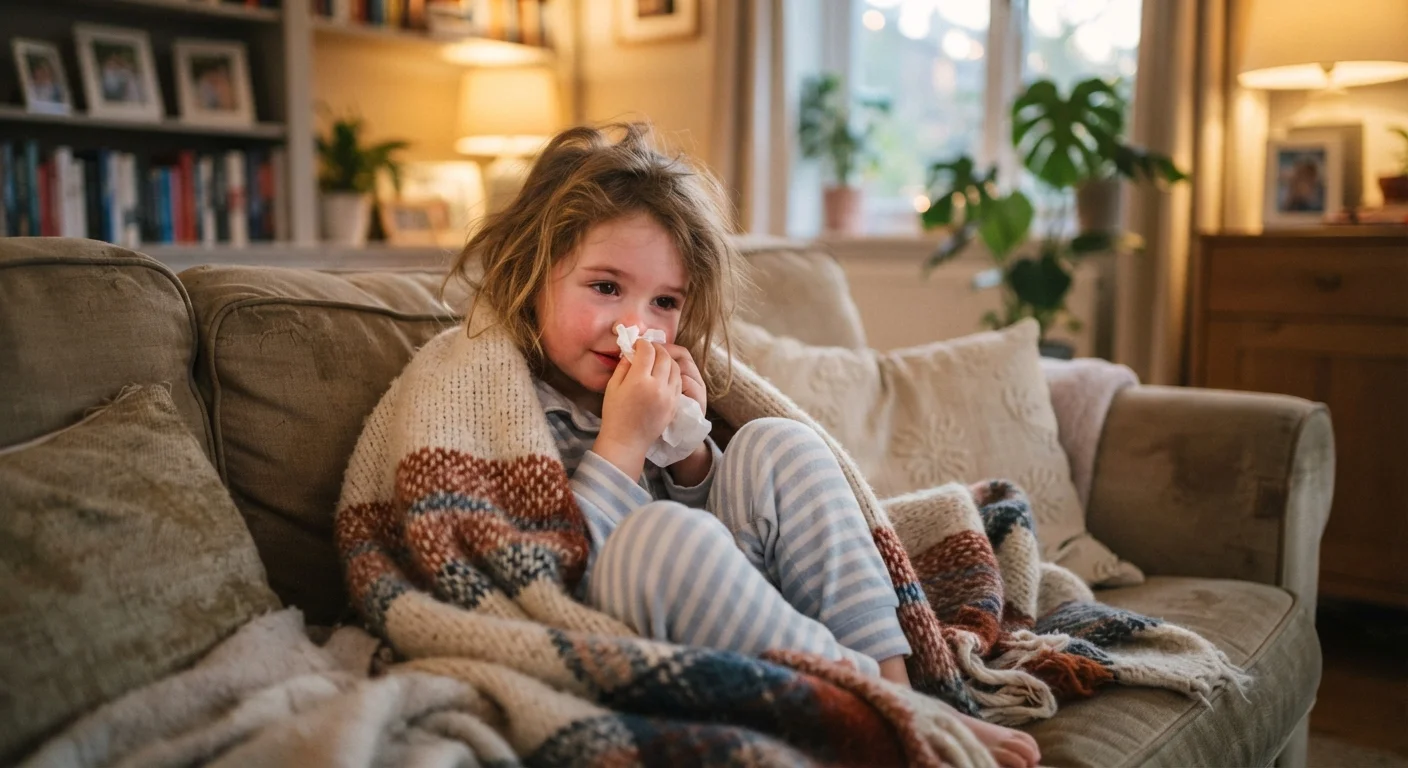
It can feel relentless - just as one runny nose clears up, another arrives. For many parents, a child who seems to always be sick is a source of real worry. But pediatric health experts offer a reassuring perspective: frequent colds in early childhood are, for most children, a completely expected feature of normal immune development.
The CDC notes that young children commonly experience more upper respiratory infections than adults. Rhinoviruses alone - the most frequent culprits behind the common cold - include well over 100 distinct strains. Because immunity to one strain generally does not protect against others, children encounter one unfamiliar virus after another in their early years.
Group settings matter enormously here. Children in daycare or preschool programs are in consistent close contact with peers, all of whom are similarly encountering new pathogens. The result is a higher rate of viral transmission that, while frustrating for families, is playing an important biological role.
6-8
Average colds per year in young children
The American Academy of Pediatrics considers this range typical for children, particularly in the early school years.
200+
Virus strains that can cause the common cold
Rhinoviruses and other cold-causing viruses come in many distinct strains, each requiring its own immune response.
7-10 days
Typical cold duration in children
Most uncomplicated colds resolve within this window without requiring medical treatment, according to general pediatric guidance.
How a Child's Immune System Actually Learns
At birth, babies carry some immune protection passed from their mothers - particularly through maternal antibodies transferred during pregnancy and, for breastfed infants, through breast milk. But this borrowed immunity is temporary and does not substitute for the child's own immune memory.
The adaptive immune system - the branch responsible for recognizing specific pathogens and remembering them - is present from birth but largely untested. Every infection a child's body successfully fights off leaves behind memory B-cells and T-cells, specialized immune cells that enable a faster, stronger response if the same pathogen is encountered again. This is the same fundamental principle behind how vaccines work, as explained in our article on childhood vaccines and the science behind them.
Over time, a child's immune repertoire expands. By the school-age years, most children begin getting fewer colds annually - not because their immune systems are working harder, but because they have already built memory against a widening range of viruses.
Handwashing Remains the Most Effective Prevention
Teaching children to wash their hands thoroughly - especially before eating and after blowing their nose - remains one of the most evidence-supported ways to reduce cold transmission. The CDC recommends washing with soap and water for at least 20 seconds. This simple habit reduces spread without interfering with normal immune development.
What Frequent Illness Does - and Doesn't - Signal
The sheer number of colds a child gets each year can make parents question whether something deeper is wrong. In the vast majority of cases, frequent mild respiratory infections are a sign of a normal immune system doing its job, not a sign of immune deficiency.
Immune deficiency disorders do exist and are worth knowing about, but they typically present differently from ordinary frequent colds. Pediatricians generally look for patterns like unusually severe infections, infections in unexpected parts of the body, or recovery times that are far longer than typical. Routine well-child visits are a valuable opportunity to raise these observations - your child's pediatrician can track patterns over time. Our companion guide on well-child visits at each developmental stage covers what pediatricians typically assess at each checkup.
It's also worth noting that respiratory illnesses can sometimes complicate other conditions. Families managing childhood asthma, for example, often find that colds are common triggers for breathing difficulties - something our article on raising a child with asthma addresses in more depth.
When to Loop In Your Pediatrician
If your child's colds frequently lead to complications like ear infections, sinus infections, or breathing difficulties, bring this pattern to your pediatrician's attention. Tracking the frequency, duration, and severity of illnesses over time gives your child's doctor useful information - and routine checkups are the right setting for these conversations.
This article is for general informational purposes only and is not a substitute for professional medical advice. Always consult your child's pediatrician with specific health concerns.