

Key Takeaways
Our Verdict
Buying used delivers genuine value in categories with predictable wear, low safety stakes, and strong resale markets - furniture, books, hand tools, and certain electronics among them. New purchases make the most sense when safety, hygiene, manufacturer warranties, or long-term reliability are non-negotiable. The smartest approach is category-by-category evaluation rather than a blanket policy in either direction.
| Best for | Recommended |
|---|---|
| Budget-conscious families furnishing a home | Second-Hand |
| Families purchasing safety or child-protection equipment | New |
| Buyers seeking manufacturer warranties and long-term support | New |
| Shoppers acquiring books, hand tools, or lightly used sporting goods | Second-Hand |
The Real Question: Value, Not Just Price
Framing the second-hand versus new decision purely as a price comparison misses the point. A used item that fails within months, lacks replacement parts, or poses a safety risk is not a bargain - it's a delayed expense. Conversely, buying new out of habit in categories where used goods perform identically means leaving real money on the table.
A more useful framework asks three questions before any purchase: What is the realistic condition I can expect? What are the safety or hygiene stakes? How does depreciation behave in this category? Answering these honestly points toward the right channel almost every time.
For a broader foundation on spending confidently, see the complete primer on intentional spending that walks through core concepts for families new to deliberate purchasing.
Use the Depreciation Curve as Your Guide
Items that lose the most value in the first year - vehicles, electronics, furniture - often make the strongest used-purchase candidates. Once that initial depreciation has been absorbed by the first buyer, you get nearly the same utility at a fraction of the original cost. Look up typical resale values before any significant purchase to understand where an item sits on its depreciation curve.
Where Second-Hand Reliably Wins
Certain categories depreciate sharply the moment they leave a store, yet deliver nearly identical utility whether purchased new or used. Furniture is a prime example - a solid wood dining table loses a significant portion of its retail price at resale but functions identically for decades. The same applies to books, hand tools, musical instruments, and adult clothing in good condition.
Children's clothing is one of the highest-value used categories for families. Kids outgrow sizes in months, meaning lightly used garments are abundant and often nearly new. Similarly, sporting equipment for activities a child is trying for the first time makes little financial sense to buy new.
Used vehicles represent the largest category where second-hand often wins on value, particularly in the two-to-four-year-old window when steep new-car depreciation has already occurred but the vehicle still has substantial life remaining. The guide to assessing a used car before making an offer covers the inspection steps that protect buyers in that market. More general guidance for families navigating vehicle decisions is available through the Car Buying Tips hub.
| Category | Second-Hand | New | |
|---|---|---|---|
| Furniture | Strong value; inspect for damage | High markup; depreciates immediately | |
| Child car seats | Avoid; safety history unknown | Recommended; verified integrity | |
| Clothing (children's) | Excellent value; fast outgrown | Often unnecessary expense | |
| Mattresses | Hygiene risk; generally avoid | Preferred for allergen control | |
| Vehicles | Best value at 2-4 years old | High depreciation in year one | |
| Major appliances | Check energy rating and history | Current efficiency standards met | |
| Books & hand tools | Near-identical utility; clear win | Rarely justified for most users |
Where New Is Worth the Premium
Safety-critical items are the clearest case for buying new. Child car seats should almost always be purchased new: they may have been in an accident (which compromises structural integrity in ways invisible to the eye), and expiration dates on materials are real. The same logic applies to bicycle helmets and other protective gear.
Mattresses present a hygiene case for new: allergens, dust mites, and bed bugs can survive in used mattresses, and the interior condition is impossible to verify visually. For families with allergy sensitivities, this risk generally outweighs the savings.
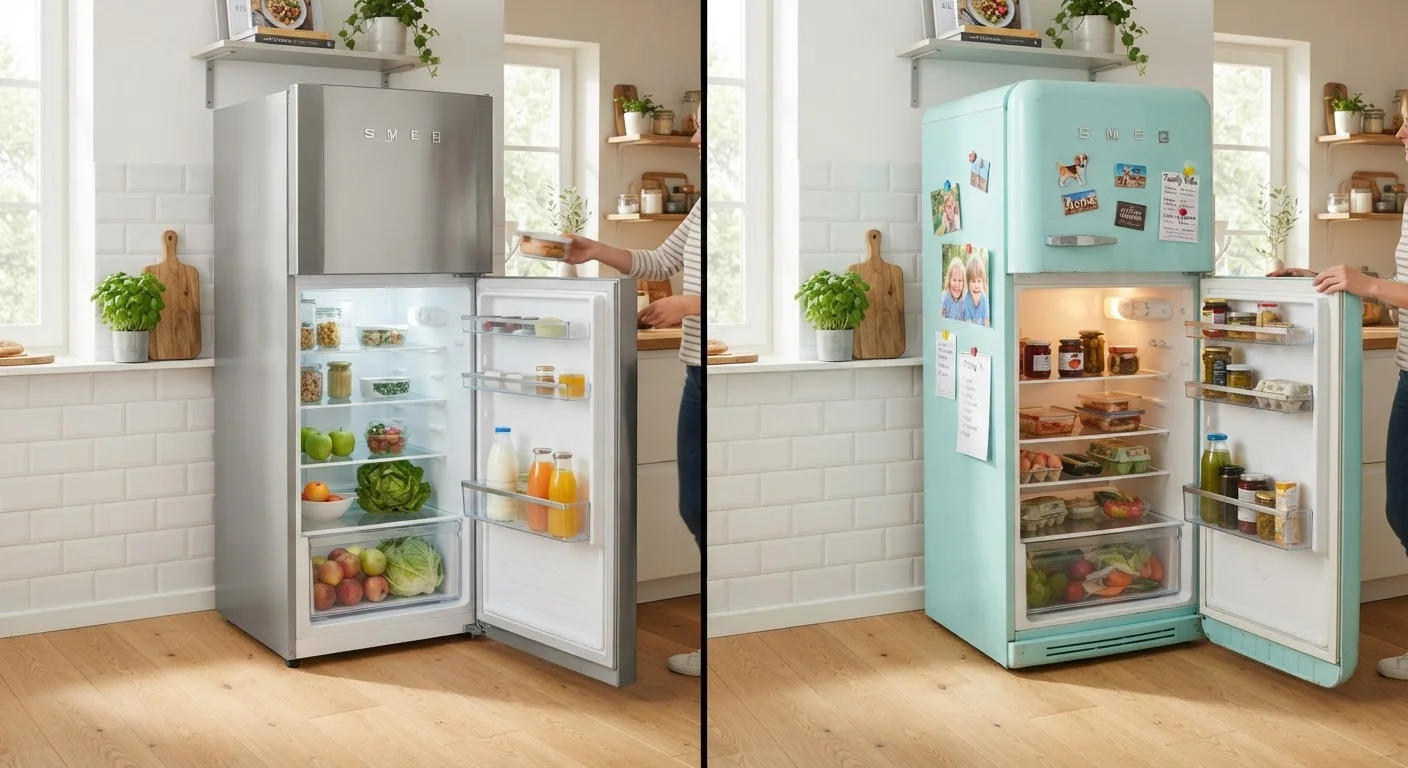
Major appliances occupy a middle ground. A used refrigerator or dishwasher from a reputable seller with documented service history can be a reasonable purchase, but older units often have significantly higher energy consumption than current models - meaning the purchase price savings may be offset by utility costs over time. When energy efficiency matters, new or certified-refurbished units with current ratings are worth the premium.
Warranties are another decisive factor. Some purchases - HVAC systems, water heaters, certain electronics - carry manufacturer warranties that require original purchase documentation and are non-transferable. Buying used forfeits this protection entirely.
Never Skip a Recall Check on Used Children's Products
The U.S. Consumer Product Safety Commission (CPSC) has recalled thousands of children's products over the years, including cribs, strollers, high chairs, and toys. Recalled items frequently remain in circulation through secondhand markets because sellers are unaware or undisclosed. Always search the CPSC recall database at cpsc.gov before purchasing any used product intended for children.
Evaluating Any Used Purchase: A Practical Checklist
Regardless of category, a few principles apply across the board when buying second-hand:
- Inspect before committing. Request photos of wear points, ask about the item's history, and - where possible - test it in person. For higher-value purchases, consider a third-party inspection.
- Research recall history. The U.S. Consumer Product Safety Commission (CPSC) maintains a searchable recall database. Before buying any used product for a child, verify it has not been recalled.
- Factor in total cost. Add any cleaning, repair, or part-replacement costs to the purchase price before comparing it to a new equivalent. The gap sometimes narrows considerably.
- Understand the resale market. Categories with active resale markets (furniture, instruments, vehicles) allow you to recoup value later. Niche items with thin markets are harder to move if they don't work out.
For families evaluating ownership against other models entirely, renting vs. buying household items covers situations where neither new nor used ownership is the smartest call. And for a broader look at spending strategies, the Saving More hub offers additional tools for stretching the family budget.
This article provides general consumer information and is not a substitute for professional financial advice tailored to your household's specific circumstances.