

Key Takeaways
The Real Cost of 'I'll Do It Later'
Every vehicle depends on a web of interconnected systems. When one small component is neglected, the stress it creates ripples outward - often silently - until a much larger failure surfaces. That $40 oil change skipped for three months can, over time, contribute to sludge buildup that shortens engine life. The worn wiper blades left on through winter may seem like a minor annoyance until reduced visibility contributes to an accident.
The pattern is consistent: deferred maintenance shifts costs forward and amplifies them. Understanding which tasks carry the highest downstream risk - and why owners routinely skip them - is the most practical form of financial protection a driver can practice. For a broader look at how hidden ownership costs accumulate, see how overlooked costs add up across major purchases.
Delaying oil and filter changes beyond the recommended interval.
Why it happens: Owners often extend intervals because the car still seems to run fine, or to postpone an expense during a tight month.
Ignoring tire pressure and rotation schedules.
Why it happens: Tires look fine from the outside even when underinflated or wearing unevenly, so drivers underestimate the urgency until a blowout or premature replacement forces the issue.
Skipping coolant flushes and fluid level checks.
Why it happens: Coolant degradation is invisible to the average driver, and the consequences - overheating, corrosion - develop slowly until they don't.
Putting off brake pad replacement until metal-on-metal contact occurs.
Why it happens: Brake wear is gradual, and many drivers interpret squealing as a temporary nuisance rather than a clear service indicator.
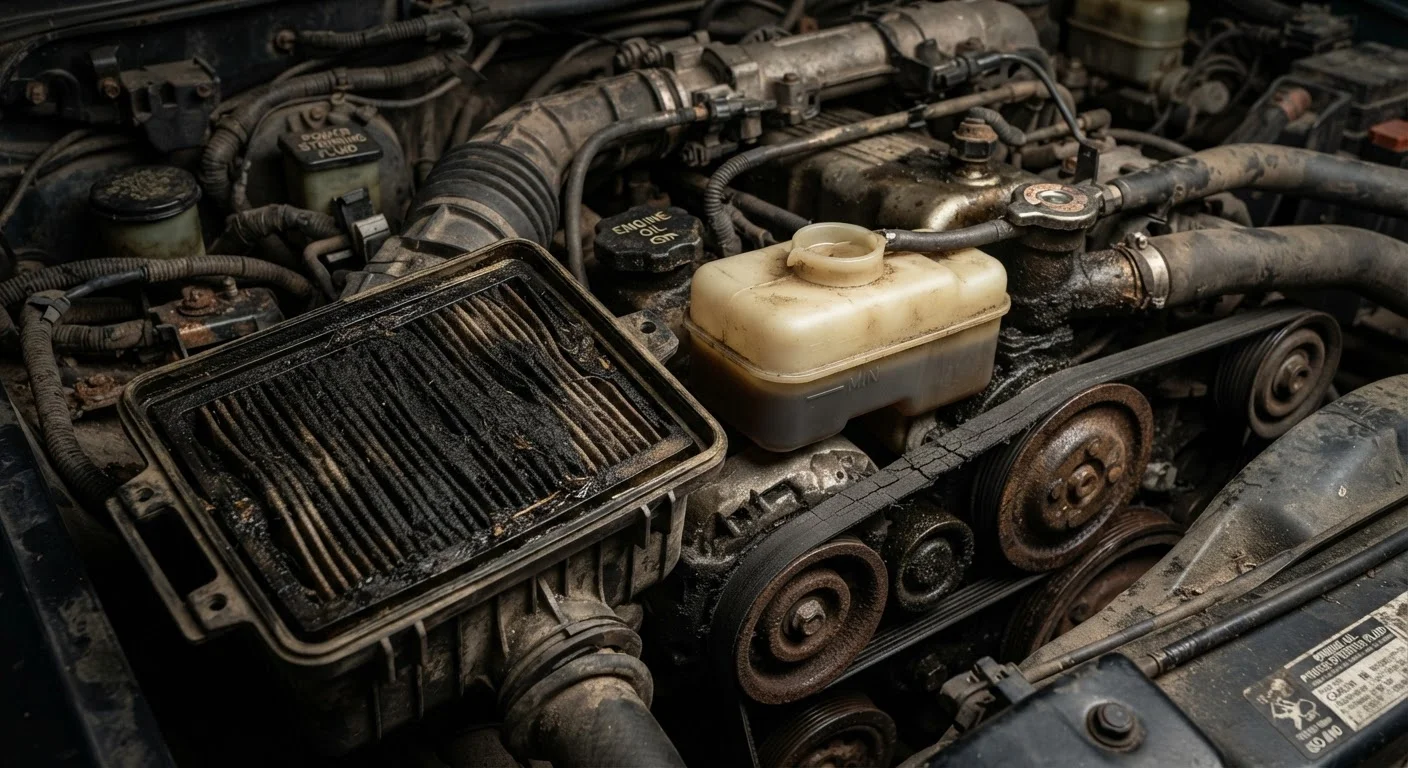
Neglecting air filter replacements on both the engine and cabin.
Why it happens: Air filters are out of sight and easy to forget; their effects on performance and fuel efficiency are gradual rather than dramatic.
Patterns That Make Neglect Worse Over Time
Most deferred maintenance isn't the result of carelessness - it stems from predictable pressures: busy schedules, tight budgets, and the mistaken belief that a vehicle running without symptoms must be fine. Symptoms of declining maintenance often appear gradually and are easy to rationalize away until a hard breakdown forces action.
~$1,200
Average engine repair cost from oil neglect
Industry service data consistently shows that oil sludge-related engine damage - largely preventable - represents one of the most common and expensive avoidable repair categories.
4-5×
Cost multiplier when rotors are damaged by worn pads
Automotive service professionals estimate that waiting until brake pads are fully worn through can multiply total brake service costs by four to five times compared to timely pad replacement.
Building a simple maintenance log - even a notes app entry - changes the dynamic. When you can see the last date an item was serviced, the urgency becomes concrete rather than abstract. If you're weighing which tasks to handle yourself versus delegating to a shop, our guide to DIY vs. shop decisions can help you allocate your time and money effectively.
Don't Rely on Warning Lights Alone
Dashboard warning lights are a last resort, not a maintenance schedule. Many critical wear conditions - including low brake pad thickness, degraded coolant, and tire wear - do not trigger a warning light until damage is already underway. Proactive inspection intervals, not reactive alerts, are the foundation of cost-effective ownership.