

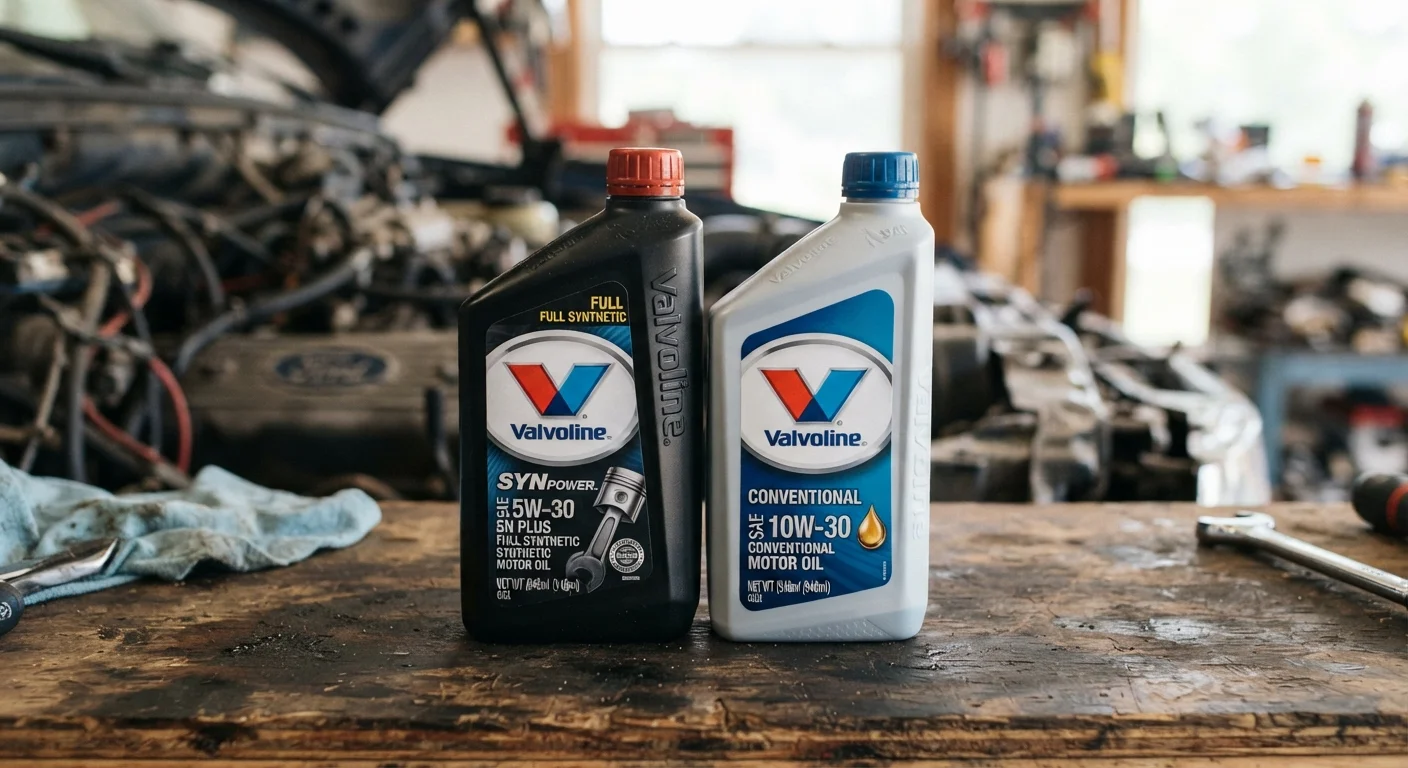
Key Takeaways
Option A
Synthetic Motor Oil
The engineered, high-performance choice for modern engines.
Best for: Best for newer vehicles, extreme driving conditions, or drivers who prefer longer intervals between oil changes.
Option B
Conventional Motor Oil
The time-tested, straightforward standard for everyday engines.
Best for: Best for older vehicles with simple engines and drivers following a consistent, frequent oil change routine.
If you drive a newer vehicle or one with a turbocharged engine
Synthetic Motor Oil
Modern turbocharged and high-compression engines generate more heat and require tighter lubrication tolerances that synthetic oil is specifically engineered to handle.
If you own an older, high-mileage vehicle with no specified oil type
Conventional Motor Oil
Older engines with more tolerances and wear may actually benefit from the slightly thicker film conventional oil provides, and the lower cost suits more frequent changes.
If you drive in extreme conditions - very cold winters, desert heat, or towing regularly
Synthetic Motor Oil
Synthetic oil maintains viscosity stability across a much wider temperature range and resists breakdown under sustained heavy loads better than conventional oil.
If you prioritize the lowest upfront maintenance cost and change oil frequently
Conventional Motor Oil
Conventional oil costs significantly less per quart, and for drivers who change oil every 3,000-5,000 miles on a simple engine, it remains a practical and adequate choice.
What Makes Them Different at a Fundamental Level
The core difference between synthetic and conventional motor oil lies in how each is made. Conventional oil is refined from crude petroleum, which means it retains some natural impurities and molecular inconsistencies even after processing. Synthetic oil, by contrast, is either fully engineered from chemical compounds or highly refined to remove nearly all impurities - resulting in more uniform, purpose-built molecules.
This molecular consistency is why synthetic oil performs more predictably under stress. It flows better at cold startup temperatures, resists thermal breakdown longer under high heat, and maintains its protective film at extreme viscosity ranges. Conventional oil can achieve adequate lubrication under normal conditions, but its natural variability means performance degrades faster, particularly under heat and pressure.
There's also a middle category - synthetic blend oil - which mixes both types to offer some performance benefits at a lower cost than full synthetic. It's worth knowing this option exists, though your owner's manual remains the definitive guide on what your specific engine needs. See our guide to engine fluids for a broader look at how motor oil fits into your vehicle's overall fluid system.
| Criterion | Synthetic Motor Oil | Conventional Motor Oil |
|---|---|---|
| Source | Chemically engineered or highly refined | Refined from crude petroleum |
| Typical change interval | 7,500-10,000+ miles | 3,000-5,000 miles |
| Cost per quart | Higher | Lower |
| Cold-weather performance | Flows well at very low temps | Can thicken more in extreme cold |
| Heat and stress resistance | Stronger resistance to breakdown | Degrades faster under high heat |
| Required by manufacturer | Many modern engines require it | Typically older or simpler engines |
| Best suited for | Turbo, high-performance, newer engines | Older engines, budget-focused maintenance |
Oil Change Intervals and Long-Term Cost
One of the most practical differences for families is how often each oil type needs changing. Conventional oil is generally recommended at intervals of 3,000-5,000 miles. Synthetic oil, depending on the vehicle and driving conditions, can often go 7,500-10,000 miles or more between changes - some manufacturers specify even longer intervals for full synthetic in newer models.
2x
Longer change intervals vs. conventional
Many full-synthetic formulations support intervals roughly twice as long as conventional oil under normal driving conditions, according to industry specifications from major oil manufacturers.
~30%
Higher average cost per quart for synthetic
Synthetic oil typically costs significantly more per quart than conventional, though the gap varies by brand tier and retailer.
That extended interval matters when you do the math. A year of driving might require three or four conventional oil changes versus one or two synthetic changes. The higher per-quart price of synthetic can be partially offset by fewer service visits. That said, the total cost comparison depends on your specific vehicle, how many quarts it requires, and local labor rates - so the math isn't universal.
For a deeper look at what change intervals actually mean for your car, our article on oil change intervals breaks down how manufacturer recommendations have evolved with modern oil technology.
Which Oil Is Right for Your Vehicle?
The single most important factor in this decision isn't price or marketing - it's your owner's manual. If your manufacturer specifies a particular oil grade or type (such as 0W-20 full synthetic), using anything else can void warranty coverage and, in some engines, contribute to premature wear. Many vehicles built after 2010 leave the factory with synthetic oil and are designed around its performance characteristics.
Older vehicles without a synthetic specification can typically run either type safely, but switching an older, high-mileage engine from conventional to synthetic should be approached with some care. In some cases, worn seals that have adapted to conventional oil's properties may develop minor leaks when exposed to the different chemical composition of full synthetic - though this is less common with modern synthetic formulations than it once was.
Switching Oil Types Mid-Life: What to Know
Switching from conventional to synthetic in a well-maintained engine is generally safe and does not require a special flush. However, if an older engine has accumulated sludge from infrequent oil changes, address that issue first. Always verify the correct viscosity grade (e.g., 5W-30) when switching - the grade matters as much as the type. When in doubt, consult a qualified mechanic familiar with your vehicle's history.
Extreme driving conditions - sustained highway speeds, frequent cold starts in sub-freezing temperatures, towing, or stop-and-go city traffic - generally favor synthetic oil's superior resistance to breakdown and temperature extremes. For typical suburban family driving in moderate climates, a quality conventional oil changed on schedule does a fully adequate job in engines designed for it. Staying current on your full vehicle maintenance schedule matters as much as the oil type you choose.