

Key Takeaways
Why Species and Breed Matter More Than Floor Plans
Apartment living with a pet is less about square footage and more about whether the animal's behavioral needs can realistically be met within the constraints of smaller, shared-wall spaces. Noise, exercise requirements, social needs, and odor management all interact with the realities of apartment life in ways that vary dramatically by species—and even by individual animal.
This guide walks through common pet types with honest assessments of where they thrive and where they struggle. Whether you're a first-time pet owner or adding a second animal to your household, realistic expectations prevent situations that end in rehoming. For a broader framework on matching pet options to household types, our article on mapping pet options to family lifestyles offers a useful starting point.
Lease Terms and Building Rules Come First
Before evaluating any species for apartment suitability, review your lease and any building rules carefully. Many leases restrict pets by species, weight, or breed—and some prohibit all animals except fish. Violating these terms can result in lease termination or loss of deposit. If a building is labeled 'pet-friendly,' ask specifically what that covers, since definitions vary widely. For a deeper look at what that label means in practice, see our article on what 'pet-friendly' really means.
Cats: Naturally Apartment-Compatible
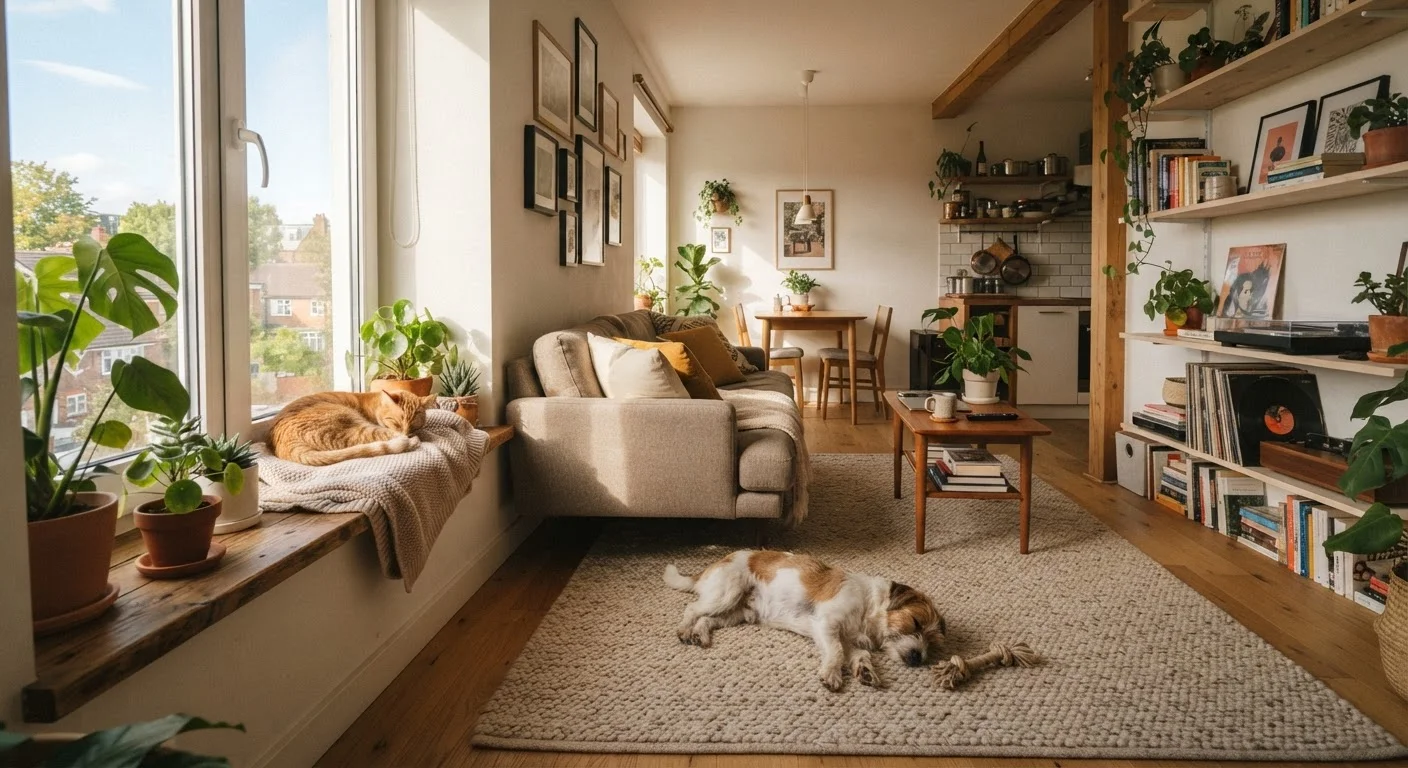
Cats are among the most adaptable companion animals for apartment dwellers. As naturally territorial animals that spend significant time sleeping and self-grooming, they require far less square footage than dogs of comparable size. A well-enriched apartment—with vertical space like cat trees, window perches, and interactive toys—can meet most cats' physical and mental needs.
The primary trade-offs involve litter box placement, odor management in smaller spaces, and the social needs of the individual cat. Some cats, particularly those adopted as single pets, may experience boredom or anxiety if left alone for long stretches. Adopting a bonded pair can address this, though it doubles litter and food responsibilities.
Vertical space and enrichment matter more than floor square footage for most cats.
Small and Low-Energy Dog Breeds: A Conditional Fit
Many small dog breeds—such as Cavalier King Charles Spaniels, Shih Tzus, and French Bulldogs—are commonly recommended for apartment life because of their compact size and lower exercise demands. However, size alone is not a reliable predictor. Temperament, noise level, and trainability matter just as much.
Some small breeds are prone to excessive barking, which can create friction with neighbors sharing walls and ceilings. Others have high prey drives or anxiety that requires careful management. Before selecting a breed, research breed-typical behaviors honestly and factor in your building's noise tolerance. Daily walks remain essential for all dogs regardless of size.
A quiet temperament and low bark tendency often matter more than body size in apartments.
Large and High-Energy Dogs: Honest Assessment Required
Large or highly active breeds—Border Collies, Siberian Huskies, Vizslas, and similar working dogs—are generally poor matches for apartments without extraordinary commitment. These dogs were selectively bred for sustained physical and mental output. Without daily vigorous exercise and enrichment, they frequently develop destructive behaviors, anxiety, and excessive vocalization.
That said, some large breeds are calmer by disposition. Greyhounds, for instance, are often described by veterinary behaviorists as surprisingly low-energy indoors despite their athletic build. If you're considering a large dog in an apartment, consult breed temperament resources and speak with a veterinarian or certified animal behaviorist about your specific situation before committing.
Working breeds need more than space—they need structured daily output that apartments rarely provide on their own.
Small Mammals: Compact but Often Misunderstood
Guinea pigs, rabbits, hamsters, and gerbils are frequently assumed to be low-maintenance apartment pets, but each species has distinct social and environmental needs. Guinea pigs, for example, are social animals that generally do better in pairs and require a cage substantially larger than most starter kits provide. Rabbits need several hours of supervised out-of-cage time daily and can be destructive chewers if bored.
On the practical side, most small mammals are quiet (though some are nocturnal and active at night), produce manageable waste volumes, and are accepted by more landlords than dogs or cats. Allergy considerations still apply—guinea pigs in particular are a common allergen source. For a broader size comparison across pet types, see our household-fit framework for small vs. large pets.
Small mammals are quiet and compact but often need more space and social contact than packaging suggests.
Birds: Noise and Space Trade-Offs
Birds range enormously in their apartment suitability. Smaller species like budgerigars (budgies) and cockatiels are relatively quiet and compact, making them reasonable apartment options for owners who can provide daily interaction and mental stimulation. Larger parrots—African Greys, Macaws, Cockatoos—can produce vocalizations loud enough to violate noise ordinances and distress neighbors, and their intelligence demands intensive daily enrichment that most owners underestimate.
All pet birds require clean air (they are highly sensitive to aerosols, non-stick cookware fumes, and scented candles), social interaction, and appropriately sized housing. Before choosing a species, verify your lease permits birds and research the average lifespan—some larger parrots live 50–80 years, representing a multi-decade commitment.
Smaller bird species can thrive in apartments; large parrots rarely suit shared-wall living environments.
Fish and Reptiles: Often Overlooked, Often Well-Suited
Aquariums and reptile enclosures occupy defined footprints, produce no noise, and are accepted by many landlords who restrict cats and dogs. Fish are genuinely low-allergen, quiet, and can offer real enrichment value—research suggests watching fish may reduce stress for some people, though individual experience varies. The trade-offs are equipment costs, tank weight (a concern on upper floors), electricity use, and water quality maintenance.
Reptiles like leopard geckos and ball pythons are similarly self-contained and quiet, but require precise temperature and humidity control. They are not social animals in the way mammals are, which suits some owners and disappoints others. Any family with young children should discuss safe handling and hygiene practices with a veterinarian, as reptiles can carry Salmonella. Always consult your lease and local ordinances before acquiring any reptile.
Fish and reptiles fit the physical constraints of apartments well but require consistent equipment management.
Making Apartment Pet Ownership Work Long-Term
Choosing the right species is only the first step. Once you've matched a pet's needs to your space and schedule, the ongoing work is enrichment, routine, and veterinary care. Animals in confined environments benefit especially from predictable daily schedules, mental stimulation, and regular health check-ups—catch problems early before they become behavioral or medical crises.
Match Energy Levels, Not Just Body Size
When evaluating a pet for apartment life, focus on the animal's typical daily activity requirements rather than its physical dimensions. A calm, senior dog may thrive in a studio; a high-drive terrier may struggle in a two-bedroom. Ask shelter staff or breeders about individual temperament, not just breed averages—personality varies significantly within species and breeds.
If you're navigating different preferences within your household about which pet to choose, the article on choosing a pet when the family disagrees offers a structured decision framework. For ongoing care guidance once you've brought a pet home, the Pet Care Basics hub covers daily routines across species. The right pet in the right environment, properly cared for, can thrive in an apartment—the key is entering that commitment with clear, accurate expectations.