

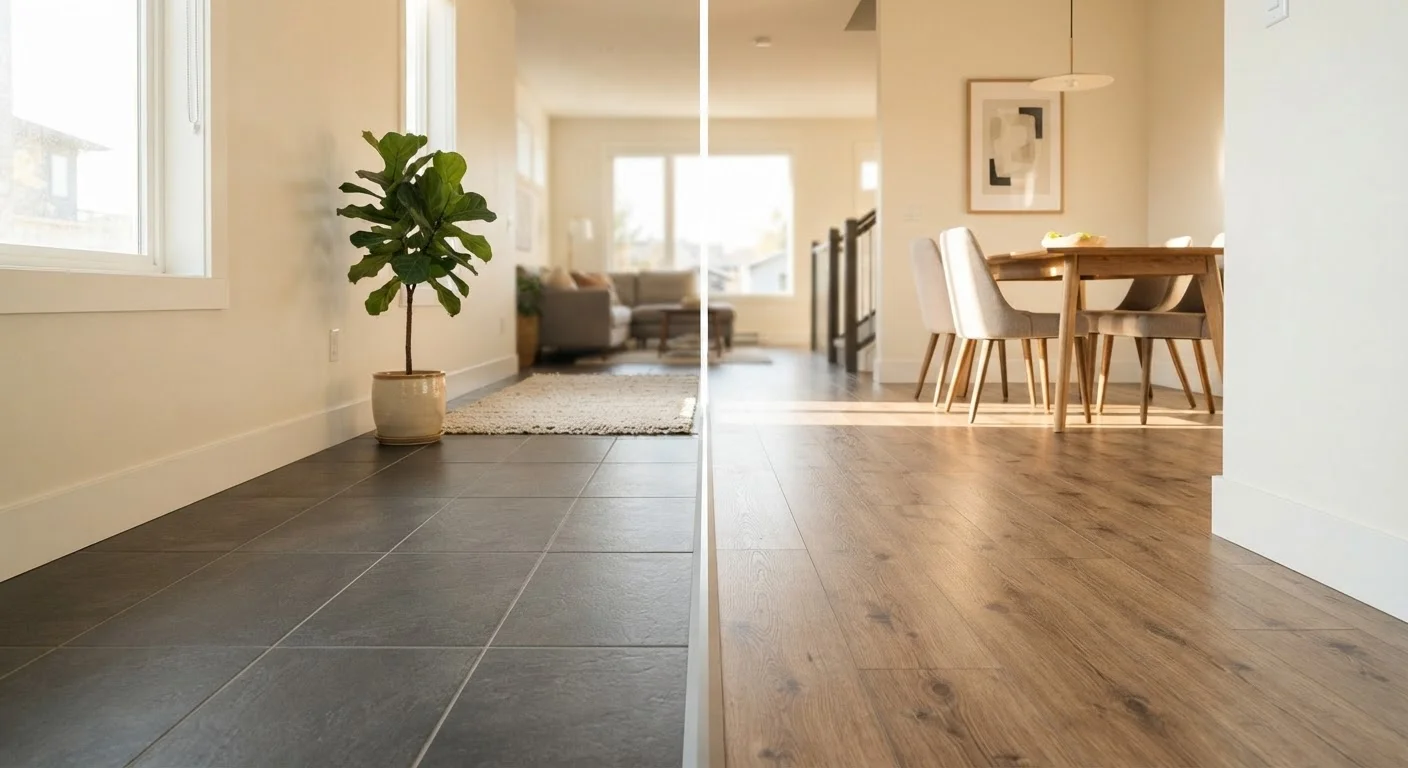
Key Takeaways
Option A
Ceramic or Porcelain Tile
The time-tested, hard-wearing classic.
Best for: High-traffic areas, wet rooms, and homeowners who want a floor that can last decades with minimal replacement.
Option B
Luxury Vinyl Plank (LVP)
The resilient, comfort-forward modern alternative.
Best for: Families seeking a warmer underfoot feel, DIY-friendly installation, and strong water resistance across large open floor plans.
If you want maximum longevity in a wet room like a bathroom or laundry room
Ceramic or Porcelain Tile
Tile is impervious to prolonged moisture exposure and won't degrade at the edges or seams over time the way sheet or plank flooring can.
If you're covering a large open area and plan to install the floor yourself
Luxury Vinyl Plank (LVP)
LVP's click-lock installation system is accessible for confident DIYers and goes down quickly over most existing subfloors without adhesive.
If you have young children or spend long hours standing in the kitchen
Luxury Vinyl Plank (LVP)
LVP's resilient core absorbs impact better than hard tile, reducing fatigue and making falls less punishing for small children.
If you're renovating to increase long-term home value in kitchens or bathrooms
Ceramic or Porcelain Tile
Tile is widely regarded by real estate professionals as a durable upgrade that resonates with buyers in high-moisture rooms.
If your budget is tight and you want a good-looking floor sooner rather than later
Luxury Vinyl Plank (LVP)
Material and labor costs for LVP are typically lower than tile, and the faster installation means less disruption to your household.
Durability and Lifespan
Tile — whether ceramic or porcelain — is one of the hardest flooring materials available. A properly installed tile floor can last 50 years or more, and the tile itself won't scratch, dent, or fade. The weak point is grout: without periodic sealing, grout lines can stain or crack, and individual tiles can chip if heavy objects are dropped on them.
Luxury vinyl plank is genuinely tough for a resilient flooring product. Its wear layer (typically measured in mils) protects against everyday scratches and scuffs, and quality planks carry warranties ranging from 15 to 25 years in residential use. However, LVP can be gouged by sharp objects, may dent under sustained heavy loads, and degrades faster in prolonged direct sunlight without UV-protective window coverings.
| Criterion | Ceramic / Porcelain Tile | Luxury Vinyl Plank (LVP) |
|---|---|---|
| Lifespan | 50+ years with proper care | 15–25 years typical |
| Comfort underfoot | Hard, cold surface | Resilient, warmer feel |
| Water resistance | Excellent (tile); grout needs sealing | Excellent; seams can allow seepage |
| DIY installation | Challenging; usually professional | Accessible click-lock system |
| Noise level | Amplifies footstep sound | Absorbs and dampens sound |
| Maintenance | Easy cleaning; grout sealing required | Easy cleaning; no grout |
| Spot repair | Straightforward tile replacement | Depends on product availability |
| Typical installed cost | Generally higher | Generally lower |
Comfort, Sound, and Temperature
This is where the two materials diverge most noticeably in daily life. Tile is rigid and cold — a feature in hot climates but a real drawback in colder regions, especially in early mornings. Radiant in-floor heating systems pair well with tile and can offset this, but that adds significant project cost and complexity.
LVP has a resilient core that gives slightly underfoot, cushioning the impact of standing, walking, and occasional drops. It also has better acoustic properties than tile, absorbing rather than amplifying footstep noise — a meaningful benefit in multi-story homes or households with young children.
50+ yrs
Typical lifespan of well-installed porcelain tile
Industry estimates from flooring trade associations suggest porcelain tile, when properly installed and maintained, can outlast most other residential flooring materials.
~12 mil
Wear layer thickness in quality LVP products
Flooring industry guidance generally recommends a wear layer of at least 12 mil for residential households with pets or children to ensure adequate scratch resistance.
1–2 days
Typical DIY LVP installation time per room
Many manufacturers and flooring educators estimate that a confident DIYer can install LVP in an average-sized room over a single weekend once the subfloor is prepared.
Installation: What Homeowners Should Know
Tile installation is a skilled trade. Substrates must be perfectly flat and structurally sound, mortar must be mixed and applied correctly, tiles must be cut precisely, and grout must be finished evenly. Most homeowners hire a professional installer, which adds notably to the total project cost. Expect timelines of several days for a single room, plus curing time before the floor can be used.
LVP is designed with DIY installation in mind. Most products use a click-lock floating system that snaps together without adhesive or nails. Cuts are made with a utility knife or simple flooring cutter. A relatively flat, clean subfloor is still essential, but the skill threshold is much lower. Many homeowners complete a room in a single weekend.
Subfloor Preparation Matters for Both
Neither tile nor LVP is forgiving of a poor subfloor. Tile requires a rigid, flat substrate — often cement backer board — to prevent cracking. LVP requires a flat, clean surface within the manufacturer's tolerance (commonly 3/16 inch over 10 feet) to avoid plank separation or hollow spots. Budget time and money for subfloor leveling before purchasing either material, especially in older homes.
Maintenance and Long-Term Upkeep
Tile is easy to clean — a damp mop handles most messes — but grout lines require attention. Unsealed grout absorbs spills and bacteria, so sealing every one to two years is a common recommendation for kitchen and bath tile. Cracked grout should be repointed before moisture seeps beneath the surface and undermines the mortar bed.
LVP requires simple routine cleaning: sweep or vacuum regularly, mop with a lightly damp mop, and avoid abrasive cleaners that can degrade the wear layer. Unlike tile, there are no grout lines to maintain. However, if a section of LVP is badly damaged, replacing individual planks requires sourcing a matching product — which can be difficult if the original run is discontinued. Tile is easier to spot-repair since individual tiles can be replaced and re-grouted.