

Key Takeaways
Orlando Beyond the Theme Parks
Orlando is widely known as a theme park capital, but the broader Central Florida region contains a remarkable variety of free and low-cost natural, cultural, and wildlife experiences. These alternatives let families stretch their vacation budgets, reduce overstimulation, and discover a side of Florida that most visitors completely skip. Exploring these options doesn't require a rental car upgrade or elaborate planning — many are within 30 to 60 minutes of major Orlando hotels.
Central Florida sits within one of North America's most ecologically diverse regions, home to spring-fed rivers, subtropical wildlife corridors, and state-managed natural areas accessible to the public.
Why Families Keep Missing the Best of Orlando
Most families arrive in Orlando with back-to-back theme park days already booked — and that's completely understandable. But a week of relentless queues, heat, and sensory overload can grind even enthusiastic kids down by day three. The good news: Central Florida is quietly one of the most nature-rich, culturally interesting regions in the American South, and most of it costs a fraction of a theme park ticket.
The trick is knowing it's there. Families who mix in even one or two low-key days return home talking about the spring where their kids swam with fish, or the wildlife refuge where they spotted an alligator from ten feet away. These moments tend to stick. For more on building an itinerary that holds up for everyone, the Complete Guide to Planning a Family Vacation is worth a read before you finalize your schedule.
Wildlife Safety in Florida Outdoors
Florida's natural areas are genuinely wild, which is part of what makes them memorable. Alligators are present in virtually all freshwater bodies in the state. Established safety guidance from Florida Fish and Wildlife recommends keeping children and pets away from the water's edge at unfamiliar sites, never feeding wildlife, and staying on designated trails and swimming areas. Posted signs at parks are there for good reason — follow them.
Natural Springs: Florida's Best-Kept Family Secret
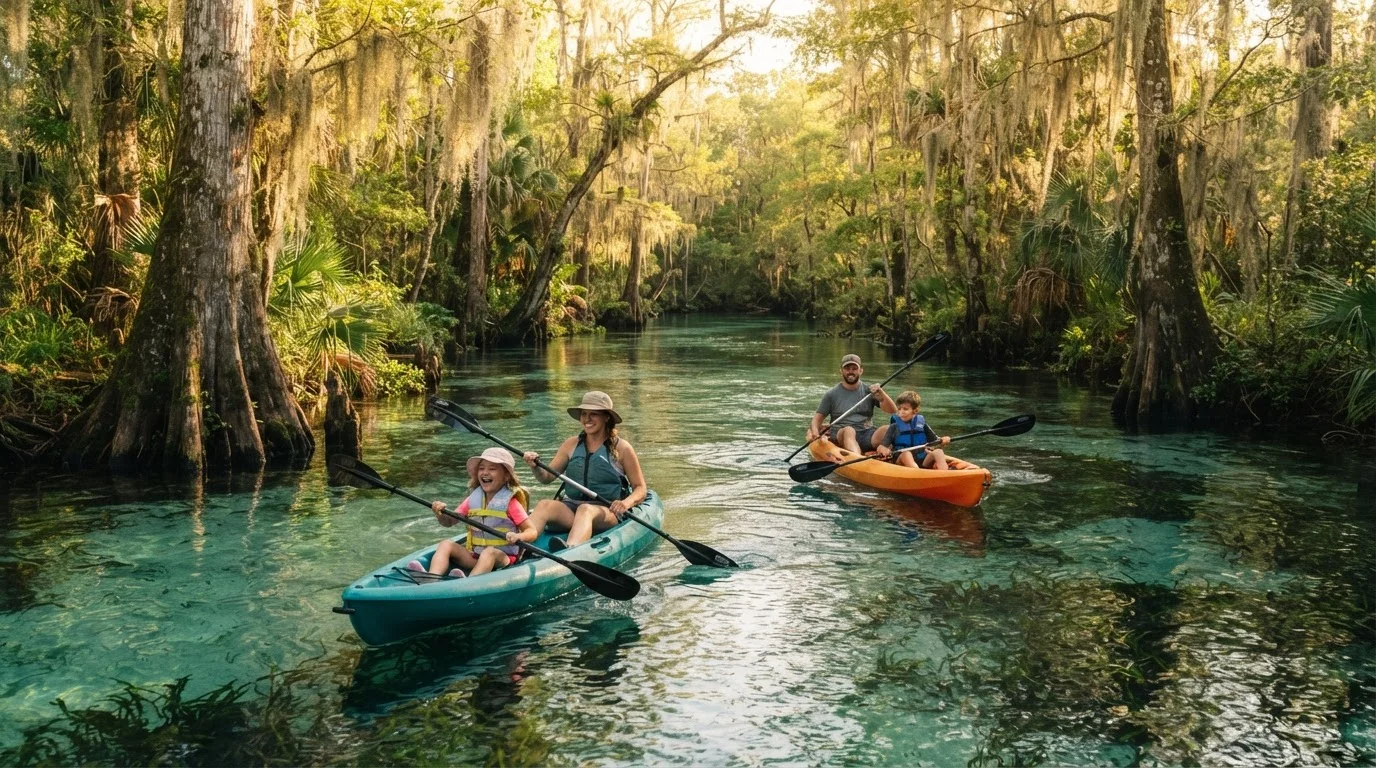
Florida sits atop one of the world's most extensive aquifer systems, and it bubbles to the surface in hundreds of crystal-clear springs — many of them right in the Orlando area. The water holds a steady 68–72°F year-round, which means it's refreshingly cool in summer and comfortably warm in winter.
Kelly Park at Rock Springs (part of Orange County's park system) features a natural float along a spring-fed run that kids absolutely love — bring a tube or rent one on-site. Admission is modest and managed by timed entry on busy days, so check the county parks website before you go. Wekiwa Springs State Park, just northwest of the city, offers swimming, paddling, and hiking trails through subtropical forest. It's a genuine half-day adventure that costs less than a single theme park meal.
700+
Named freshwater springs in Florida
Florida is home to more freshwater springs than any other state, according to the Florida Department of Environmental Protection.
140,000+
Acres in Merritt Island National Wildlife Refuge
The refuge, operated by the U.S. Fish & Wildlife Service, is one of the largest national wildlife refuges in the southeastern United States.
68–72°F
Year-round temperature of Florida springs
Florida's spring-fed waterways maintain a nearly constant temperature throughout the year due to the consistent underground aquifer source.
For families weighing how much independence versus structure they want in their trips, this is exactly the kind of experience that tips the scale — see the all-inclusive vs. independent travel comparison for a deeper look.
Wildlife and Wild Places Within an Hour of Orlando
Merritt Island National Wildlife Refuge, about 60 miles east of Orlando on the Space Coast, is one of the most biodiverse refuges in the continental United States. The free Black Point Wildlife Drive is a 7-mile loop that families can do by car — no hiking required — with alligators, manatees, and shorebirds commonly visible from the windows. Pair it with a visit to Kennedy Space Center for a full day that covers both nature and science.
Closer in, Lake Apopka Wildlife Drive (free on weekends) winds through restored wetlands northwest of Orlando and is excellent for birding. The variety of activity types here — nature walks, wildlife spotting, kayaking — means it works well for families with kids of different ages and interests, which is one of the core challenges of mixed-group travel. The guide to activities that work for mixed-age families has more on making these calls.
Arrive Early at Popular Natural Sites
Florida's most beloved spring parks and wildlife drives fill up fast on weekends, especially in summer. Many parks implement timed entry or close their gates once capacity is reached. Checking the county or state park website the morning of your visit — and aiming to arrive at or before opening time — is the single best way to guarantee entry and a less crowded experience.
Cultural Stops That Reward Curious Kids
Orlando and its neighboring communities have a surprisingly rich cultural layer that most families drive past on the way to the parks. Winter Park, just north of Orlando, is a walkable historic district with a scenic boat tour through interconnected lakes, a free art museum (Cornell Fine Arts Museum at Rollins College), and a genuine town-square park great for picnics. It's the kind of afternoon that feels almost European — unhurried, pretty, and genuinely interesting for kids and adults alike.
The Orlando Science Center offers multi-floor interactive exhibits ranging from Florida ecosystems to engineering challenges, with strong programming for school-age kids. Admission is reasonable, and the center often runs free or reduced-price community days. Checking their calendar ahead of your trip takes two minutes and can save a family of four a meaningful amount. For families sorting out accommodation that supports these kinds of flexible day trips, the hotels vs. vacation rentals comparison is a helpful read.
Note: Hours, admission prices, and entry policies at parks and cultural venues can change seasonally. Always verify directly with the venue before your visit, and check current conditions for outdoor destinations, especially regarding wildlife precautions near water.