

Key Takeaways
Why the Pacific Northwest Works So Well for Families
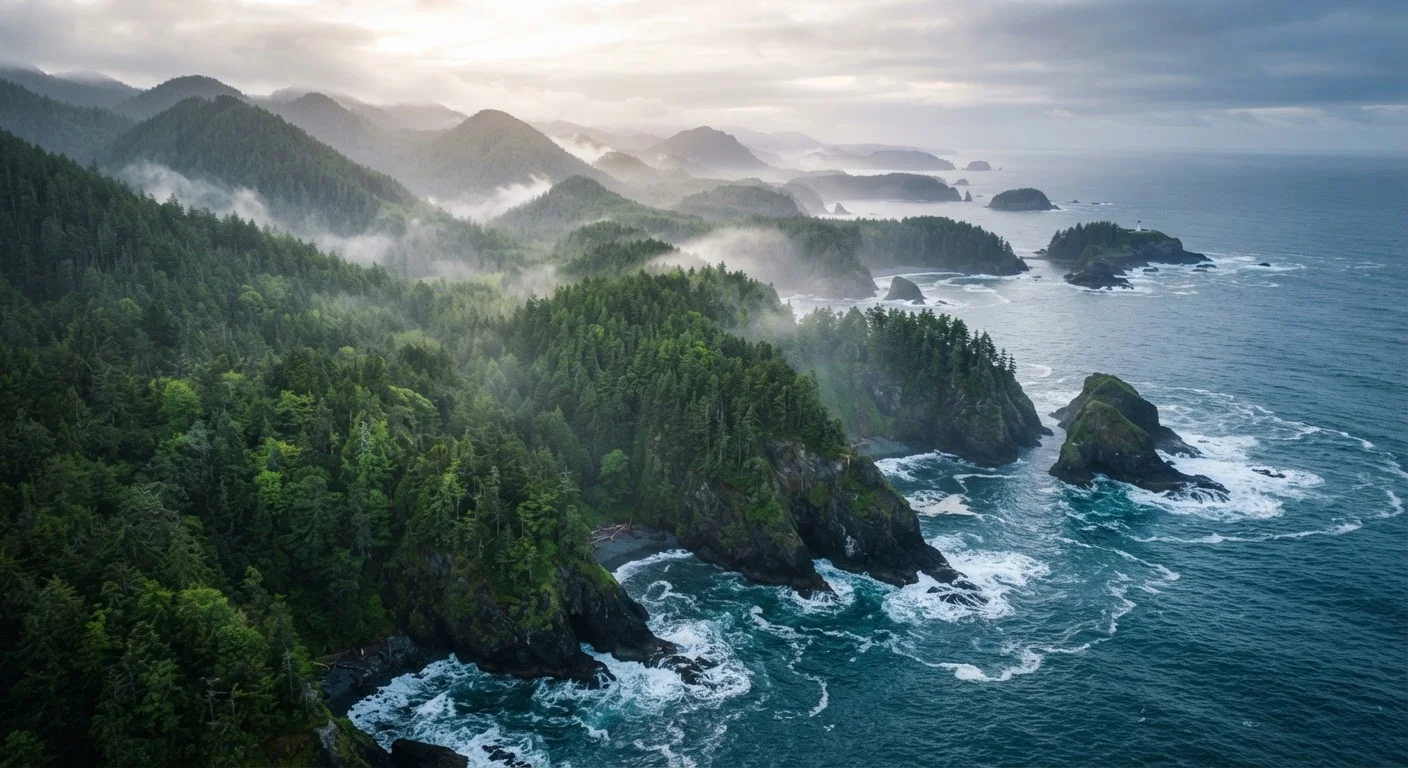
Few regions in the United States pack as much geographic variety into one road-trip-friendly area as the Pacific Northwest. Within a single week, a family can walk alongside ancient tide pools on the Oregon coast, hike beneath 300-foot Sitka spruces on the Olympic Peninsula, and watch fish fly at Seattle's Pike Place Market. That diversity is the region's secret weapon for multigenerational groups and mixed-age kids alike.
The Pacific Northwest also skews strongly toward outdoor experiences — meaning a lot of what thrills kids costs little to nothing. National parks, state beaches, and forest trails are woven into the everyday landscape. For families weighing value, that's a meaningful advantage. See our smart spending hub for broader advice on stretching your travel budget without cutting the experiences that matter.
360+
Miles of publicly accessible Oregon coastline
Oregon law designates the entire ocean shore as public land, making every beach free to access regardless of adjacent property.
1,441 ft
Depth of Crater Lake — deepest in the US
According to the National Park Service, Crater Lake is the deepest lake in the United States and one of the clearest.
922,650
Acres protected in Olympic National Park
Olympic National Park encompasses rainforest, alpine terrain, and coastline, according to the National Park Service.
Oregon's Coast and Crater Lake: Nature at Its Most Dramatic
Oregon's coastline runs more than 360 miles and is almost entirely open to the public — there are no private beaches here by state law. Towns like Cannon Beach, with its iconic Haystack Rock, and Newport, home to the Oregon Coast Aquarium, give families a mix of wild shoreline and structured activities. Kids can explore tide pools, fly kites on wide sandy stretches, and spot sea lions lounging on docks.
Inland, Crater Lake National Park is one of the most visually stunning stops in the entire country. The lake's impossibly blue water sits inside a collapsed volcano, and the Rim Drive offers viewpoints that genuinely silence even chatty teenagers. The park has junior ranger programs that work well for ages 4 and up. Note that snow can close Rim Drive well into June, so check road conditions before you go — the National Park Service posts current status on their official site.
Pack Layers, Not Just Rain Gear
Oregon coastal temperatures can swing 20°F between morning and afternoon, even in summer. Light merino wool base layers for kids pack small and dry quickly — far more practical than bulky sweatshirts. A light waterproof shell for each family member handles the inevitable coastal drizzle without weighing down your bags.
Washington's Olympic Peninsula and Rainforests
Olympic National Park is one of the few places in the lower 48 where a family can visit a temperate rainforest, alpine meadows, and a wild Pacific beach all within the same park boundary. The Hoh Rain Forest, with its moss-draped maple trees and Hall of Mosses trail, tends to stop kids mid-stride — it looks like something from a fantasy film. The 0.8-mile loop is manageable for most ages.
Hurricane Ridge, accessible by car, offers sweeping mountain views and friendly deer that often graze near the visitor center. The coastal strip near Rialto Beach is magnificent for older kids who can navigate rocky terrain and explore sea stacks at low tide. Always check tide charts before visiting coastal areas, and keep a close eye on children near the water.
Download offline maps for Olympic National Park before you arrive — cell coverage inside the park is nearly nonexistent, and having a downloaded trail map prevents real navigation stress.
Dead zones in national parks catch many first-time visitors off guard; pre-loaded maps via apps like Gaia GPS or AllTrails ensure families can navigate confidently without a signal.
At coastal areas like Rialto Beach, check a tide chart the night before and plan to arrive at or just after low tide — that's when tide pools are fully exposed and sea life is most visible.
Pacific Northwest tidal variation can be dramatic; arriving at high tide means kids see water and rocks rather than the anemones, sea stars, and crabs that make the experience memorable.
Seattle: Urban Adventure with Kids
Seattle rewards curious families. The Pacific Science Center features hands-on exhibits and an IMAX theater, while the Museum of Pop Culture (MoPOP) offers an immersive experience that tends to land well with tweens and teens. The Seattle Aquarium, situated on the waterfront, is compact enough for shorter attention spans but substantive enough to satisfy adults.
Pike Place Market is a sensory experience worth building into any Seattle day — watching fishmongers toss salmon is a genuinely memorable moment, and the market's lower levels hide craft stalls and small food vendors that make for adventurous snacking. For perspective on how Seattle's paid attractions compare to completely free museum-heavy destinations, see our guide on the Smithsonian's free museums.
The Washington State Ferries system is a highlight in itself. A round-trip ride to Bainbridge Island takes about 35 minutes each way and gives families spectacular views of the city skyline and Mount Rainier on clear days — all for the price of a regular passenger fare.
“The best family destinations are those where children can lead with curiosity — where discovery isn't scheduled but stumbled upon. The Pacific Northwest is built for exactly that.”
— Sarah Greenberger, Family travel writer and outdoor education advocate
Practical Planning: Seasons, Pacing, and Budgeting
Summer (late June through August) is the Pacific Northwest's most reliably dry window and the most popular time for family travel. Expect higher accommodation rates and crowded trailheads, particularly at Crater Lake and the Hoh Rain Forest. Visiting shoulder seasons — late May or September — can mean noticeably thinner crowds and similar weather, though some high-elevation areas may still have snow in May.
Pacing matters enormously in a region this large. Trying to hit the Oregon coast, Crater Lake, Olympic, and Seattle in a single week creates a drive-heavy grind that exhausts even adult travelers. Building a realistic itinerary with buffer time baked in will serve you far better than an overstuffed schedule. A focused one-to-two zone trip tends to leave families more satisfied than a rushed greatest-hits circuit.
For budgeting, the America the Beautiful annual pass covers entrance fees at all national parks and many federal recreation areas — a worthwhile consideration if your family plans to visit multiple parks. General financial planning guidance is available through our smart spending resources.
Wildfire Smoke Can Affect Late-Summer Plans
Eastern Oregon and parts of Washington can experience significant wildfire smoke in July and August, occasionally affecting visibility at parks like Crater Lake. Check air quality conditions through AirNow.gov and have a flexible backup plan if smoke levels are elevated — particularly important for children with asthma or respiratory sensitivities. Always consult a healthcare professional about health precautions before travel if your child has relevant conditions.
Keeping All Ages Happy Across the Region
The Pacific Northwest's range of difficulty levels — from paved waterfront promenades to serious backcountry hikes — makes it unusually accommodating for families with varied ages and abilities. Toddlers can handle the Hall of Mosses loop or Cannon Beach with ease. School-age kids tend to thrive with structured junior ranger programs and tide pool exploration. Teenagers often respond best to higher-stakes adventures: kayaking, longer ridge hikes, or ferry crossings.
For families navigating the dynamics of traveling with kids at very different stages, our guide to mixed-age family travel offers specific strategies. And if this is your first time organizing a trip of this scale, the first family vacation planning guide is a grounded starting point.
The Pacific Northwest rewards families who arrive with curiosity and a little flexibility. The rain that everyone warns you about? Kids rarely mind it — and the landscape it creates is spectacularly worth it.
National Park Service — Olympic National Park
The official NPS site for Olympic National Park includes current road conditions, permit information, junior ranger program details, and trail maps — the most reliable source before any visit.
Oregon State Parks and Recreation Department
Oregon's state parks site covers beach access points, campground reservations, and seasonal conditions along the entire coastline, including family-friendly facilities.
AirNow.gov Air Quality Index
A free tool from the EPA that shows real-time air quality conditions by location — useful for monitoring wildfire smoke during late-summer Pacific Northwest travel.
Washington State Ferries
The official ferry system site covers current schedules, fares, and real-time wait times for all Washington routes, including the popular Seattle–Bainbridge Island crossing.