

Key Takeaways
Option A
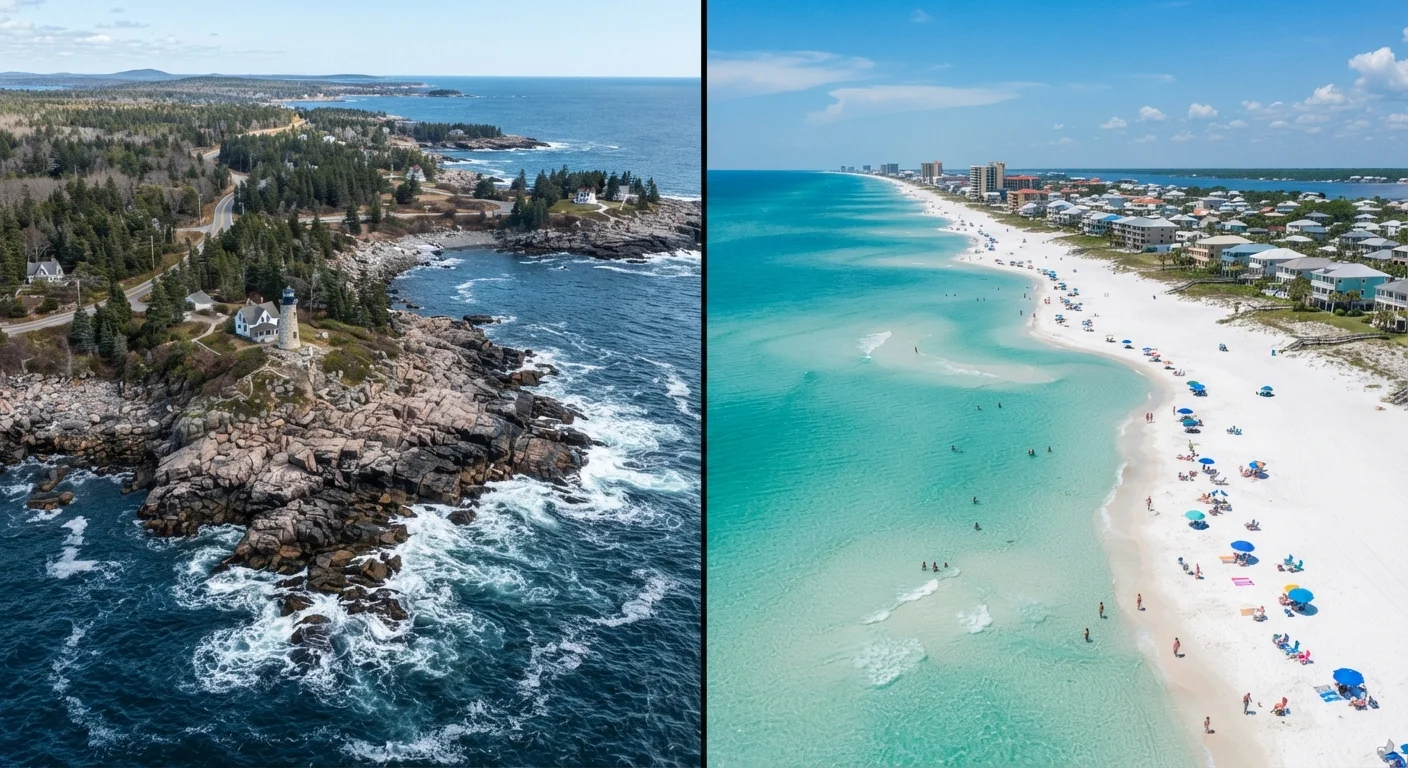
Coastal New England
The rugged, history-rich Atlantic escape.
Best for: Families who love cool water, seafood culture, tidepooling, and mixing beach days with towns full of character.
Option B
The Gulf Coast
The calm, sun-soaked, crowd-pleasing classic.
Best for: Families with young children who want warm, shallow water, long stretches of white sand, and predictably sunny weather.
If you're traveling with toddlers or kids who are still learning to swim
The Gulf Coast
Shallow, warm, and calm water along much of the Gulf makes it far more manageable and safer for little ones than the Atlantic's waves and cooler temperatures.
If your family loves history, culture, and activities beyond the beach
Coastal New England
Lighthouses, lobster shacks, whale watches, and centuries-old coastal towns give families endless options when the tide or weather shifts.
If you're planning a late spring or fall trip to stretch your budget
Coastal New England
Shoulder seasons in May–June and September offer mild weather, thinner crowds, and lower rates before and after the prime summer rush.
If sun, warmth, and maximum beach time are your family's priorities
The Gulf Coast
The Gulf delivers reliably warm weather from spring through fall, with sugary sand beaches perfect for sandcastles, shell hunting, and all-day play.
If your family wants a road trip that combines beach and city stops
Coastal New England
The compact coastal corridor from Connecticut through Maine links beach towns with cities like Boston and Portland, making a drive-and-explore itinerary very doable.
Water Conditions and Beach Safety
For families, water safety isn't a footnote — it's the headline. The Gulf Coast's shallow continental shelf produces calm, warm water that hovers around 80–85°F in summer across Florida, Alabama, and Mississippi beaches. Waves are typically gentle, and the gradual drop-off means kids can wade confidently. That consistency is hard to overstate when you have a nervous six-year-old or a toddler in a swimsuit.
New England's Atlantic beaches are a different experience entirely. Water temperatures rarely climb above the low-to-mid 60s°F even in peak summer, and surf can be brisk and unpredictable. Cape Cod, the South Shore, and Rhode Island's Narragansett beaches are beautiful but best suited for stronger swimmers who can handle chop. The upside: that invigorating cold water is a badge of honor for older kids, and the dramatic tidal flats and tidepools turn a beach afternoon into a genuine science lesson.
| Criterion | Coastal New England | Gulf Coast |
|---|---|---|
| Water temperature (summer) | Low-to-mid 60s°F | 80–85°F |
| Wave intensity | Moderate to brisk | Calm and gentle |
| Peak season | July–August | March–July |
| Weather risk | Occasional nor'easters (spring) | Hurricane season (June–Nov) |
| Activities beyond the beach | Rich: history, wildlife, cities | Moderate: water sports, parks |
| Best for age group | School-age kids and teens | Toddlers through all ages |
| Driving accessibility | Compact, road-trip friendly | Spread out; flying often needed |
Always check posted lifeguard flags and conditions before entering the water at any coastal destination. Rip currents occur on both coasts and warrant real caution regardless of destination.
Seasonality, Weather, and Timing
Timing can make or break a beach trip, and both coasts carry seasonal caveats worth understanding before you book.
The Gulf Coast's primary concern is hurricane season, which runs from June through November. Late summer trips — especially August and September — carry a meaningful (though not certain) risk of weather disruption. Many families wisely opt for May or early June, when the Gulf is warm, crowds are thinner, and rates haven't peaked. Spring break is wildly popular along the Florida Panhandle and Gulf Shores, so expect higher prices and busier beaches if that's your window.
New England shines in July and August, when daytime temperatures sit comfortably in the 70s–low 80s°F — a relief for families who find Gulf heat exhausting. September is a genuinely underrated month on the New England coast: water is at its warmest, crowds thin dramatically, and prices soften. Shoulder-season travel often delivers the same scenery at a fraction of the summer-peak stress.
83°F
Average Gulf water temp in July
NOAA buoy data consistently shows Gulf of Mexico surface temperatures in the low-to-mid 80s°F throughout peak summer months.
~63°F
Average Cape Cod water temp in July
NOAA oceanographic records show Cape Cod Bay and South Shore ocean temps typically peak in the low-to-mid 60s°F in midsummer.
June–Nov
Atlantic hurricane season window
The National Hurricane Center defines the official Atlantic hurricane season as June 1 through November 30, affecting both Gulf and Southeast coasts.
Activities, Attractions, and Kid Appeal
Both coasts offer genuine family fun — they just package it differently.
On the Gulf Coast, the beach is the attraction. Pensacola Beach, Gulf Shores, and Clearwater are built around sand, sun, and water sports. Parasailing, dolphin cruises, kayak rentals, and beachfront mini-golf are staples. Florida Gulf destinations also put theme parks and aquariums within driving distance, which is a major plus for families with varied ages and interests.
Coastal New England rewards curiosity. Whale watching out of Provincetown or Gloucester, exploring the tidepools of Acadia National Park, ferry rides to Block Island, and lobster boat tours turn a beach trip into something more layered. Kids who get restless on the sand often thrive here. Boston is within easy reach of the North Shore and Cape Cod, making a hybrid city-and-beach itinerary very practical — worth considering alongside our look at city trips versus nature destinations for families.
Cost and Logistics
Neither coast is universally cheaper — both span a wide range depending on destination, timing, and accommodation style. That said, some general patterns hold.
The Gulf Coast, particularly Florida's Panhandle and Alabama's Gulf Shores, offers a wide range of vacation rental options that can be genuinely economical for larger families, especially outside peak season. Condominiums with full kitchens let families skip restaurant bills for several meals, which adds up fast. Thinking through hotels versus vacation rentals before booking is especially relevant here.
New England's most popular spots — Martha's Vineyard, Nantucket, and coastal Maine in July — carry premium prices. However, lesser-known gems like Connecticut's Hammonasset Beach, Rhode Island's Misquamicut, or New Hampshire's Hampton Beach can offer solid value. Getting there is also worth factoring: flying into regional airports like Manchester-Boston or Providence sometimes beats flying into Boston Logan on price. Check our travel planning tips hub for more on building a realistic family travel budget.
Getting There: Flight vs. Drive
Both coastlines are accessible by road or air, but the calculation differs. New England's coastline is compact enough that a single flight into Boston, Providence, or Portland covers a lot of ground. The Gulf Coast stretches from Florida to Texas, so your specific destination matters enormously for routing. Families weighing the drive-vs-fly question for either coast will find useful framing in our comparison of road trips versus flying with kids. Always verify current transportation options and pricing directly with providers before committing.