

Why Sleep Hygiene Matters at Every Life Stage
Sleep is one of the most powerful tools families have for supporting health - yet it's also one of the most commonly sacrificed. The term sleep hygiene refers to the habits, routines, and environment that support consistent, restorative sleep. What works beautifully for a toddler may be ineffective - or even counterproductive - for a teenager or an adult.
Understanding how sleep needs and biology shift across age groups helps families build routines that actually hold. For a detailed look at recommended sleep durations by developmental stage, see our sleep-by-age breakdown.
Sleep Hygiene for Young Children (Ages 3-11)
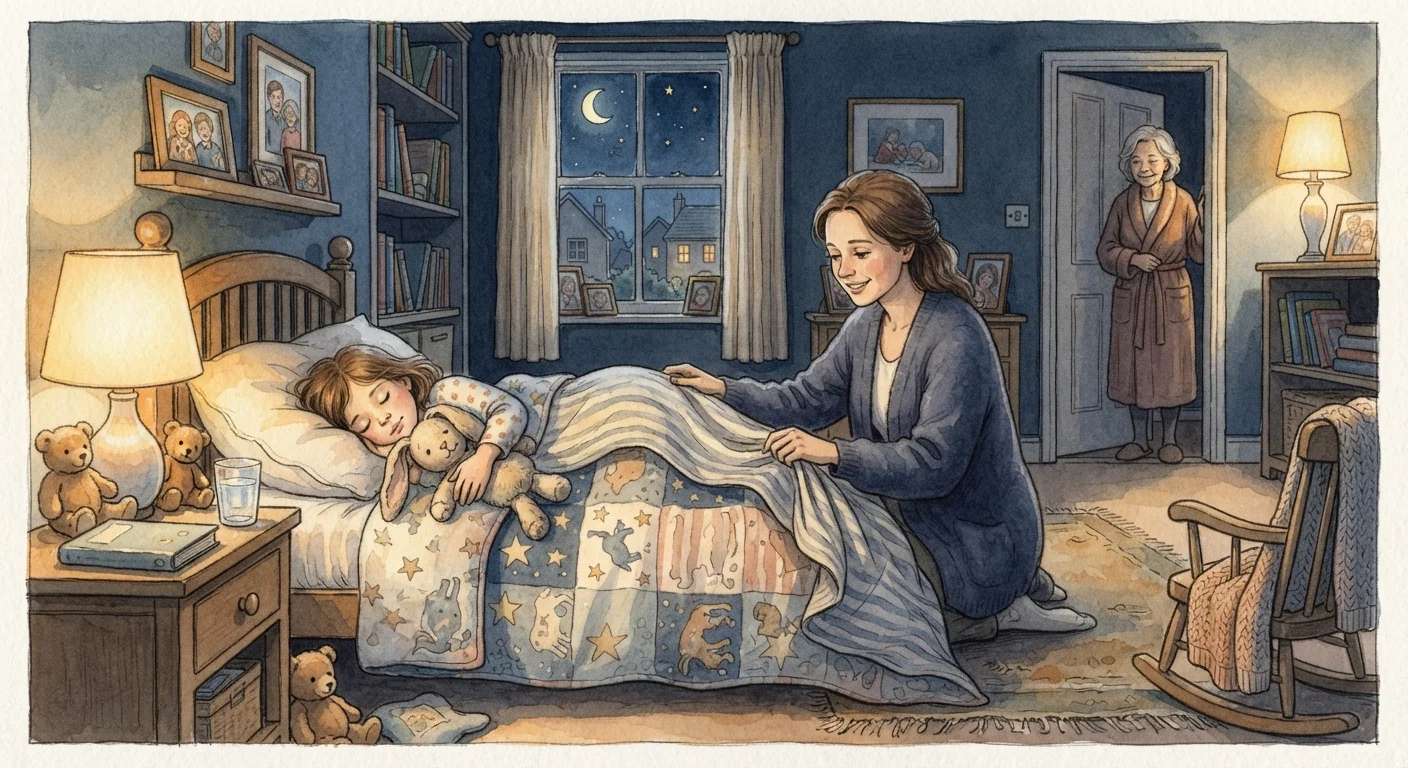
Young children thrive on predictability. A consistent pre-bed routine - such as bath, story, and lights-out in the same order each night - helps signal to a child's nervous system that sleep is coming. The American Academy of Pediatrics (AAP) recommends keeping bedrooms cool, dark, and quiet, and reserving the bed primarily for sleep rather than play or screen time.
Key strategies for this age group include:
- Consistent bedtime and wake time, even on weekends, to anchor the body's internal clock.
- A wind-down window of 20-30 minutes before lights-out, with calm activities like reading aloud.
- Limiting screens for at least an hour before bed, as blue light can suppress melatonin production.
- Comfortable sleep environment - darkness with a dim nightlight if needed, and a comfortable temperature.
How children start the night often shapes how the whole household sleeps, so these habits ripple outward. A well-rested morning follows from a well-structured evening - explore our family morning routine guide for ideas that connect bedtime habits to a healthier day ahead.
Sleep Hygiene for Teenagers (Ages 12-18)
Teenagers face a biologically driven shift in their circadian rhythm - known as a sleep phase delay - that makes falling asleep before 11 p.m. genuinely difficult. This isn't laziness; it's physiology. Yet early school start times frequently conflict with this natural pattern, making chronic sleep deprivation common among adolescents.
Sleep hygiene
A collection of behavioral and environmental practices that promote consistent, high-quality sleep. Examples include maintaining a regular sleep schedule and limiting screen exposure before bed.
Circadian rhythm
The body's internal 24-hour biological clock that regulates sleep-wake cycles, hormone release, and other physiological processes. Light exposure is its primary external cue.
Sleep phase delay
A biological shift during adolescence that pushes the natural sleep and wake times later. It makes falling asleep early genuinely difficult for most teenagers.
Social jet lag
The misalignment between a person's biological clock and their social schedule - most commonly seen when sleep patterns shift significantly between weekdays and weekends.
Melatonin
A hormone produced by the brain's pineal gland that helps regulate the timing of sleep. Its release can be suppressed by exposure to blue light from screens in the evening.
Practical sleep hygiene strategies for teens include:
- Protecting a consistent wake time, which anchors the body clock more effectively than a variable bedtime.
- Charging phones outside the bedroom to reduce late-night screen use and notification disruptions.
- Avoiding caffeine in the afternoon and evening - caffeine has a half-life of roughly five to six hours in most people.
- Keeping weekends close to weekday schedules to avoid social jet lag, which worsens Monday tiredness.
Teens who travel across time zones face additional sleep disruption challenges; the same circadian principles apply. For travel-specific strategies, see traveling with kids across time zones.
Sleep Hygiene for Adults in the Household
Adults often view sleep as the first thing to cut when schedules get crowded - a habit that accumulates as a genuine health cost over time. The CDC recommends that most adults aim for seven or more hours per night. Establishing a sleep-supportive environment and winding down intentionally makes a measurable difference.
Effective adult sleep habits include:
- A consistent sleep schedule, including weekends - irregular sleep timing disrupts the body clock even when total hours are adequate.
- Reducing alcohol near bedtime - while alcohol may promote drowsiness, it fragments sleep in the second half of the night.
- Creating a cool, dark room - core body temperature drops during sleep onset, so a slightly cooler room supports this process.
- Managing stress before bed through low-stimulation activities: light reading, gentle stretching, or brief journaling.
1 in 3
US adults not getting enough sleep
According to the CDC, about one-third of US adults report regularly sleeping less than the recommended seven hours per night.
73%
Teens not meeting sleep recommendations
CDC data from the Youth Risk Behavior Survey found that nearly three-quarters of high school students reported sleeping fewer than eight hours on school nights.
Adults modeling good sleep habits also set a powerful example for children in the household - sleep hygiene, like many wellness habits, is partly learned behavior.
This article is for general informational and educational purposes only and is not a substitute for professional medical advice. If you or a family member are experiencing persistent sleep difficulties, please consult a qualified healthcare provider.