

Key Takeaways
Why Preparation Matters More Than You Think
Many parents assume a child who refuses broccoli simply dislikes vegetables - but the research tells a more nuanced story. Children, particularly younger ones, have a higher density of taste receptors than adults, which makes them genuinely more sensitive to bitter compounds found in many vegetables. The way a vegetable is cooked, cut, seasoned, and served can transform that bitterness into something far more palatable.
Understanding this takes the blame off the child and shifts the focus to something families can actually control: technique. Whether your household includes a cautious toddler or a skeptical tween, small adjustments in the kitchen can open surprising doors. This article offers evidence-informed preparation strategies - not magic fixes, but practical tools grounded in what pediatric nutrition researchers and dietitians have consistently observed.
If you're navigating broader challenges at mealtimes, our guide to feeding picky eaters covers the behavioral side of selective eating in greater depth.
Roast Instead of Steam or Boil
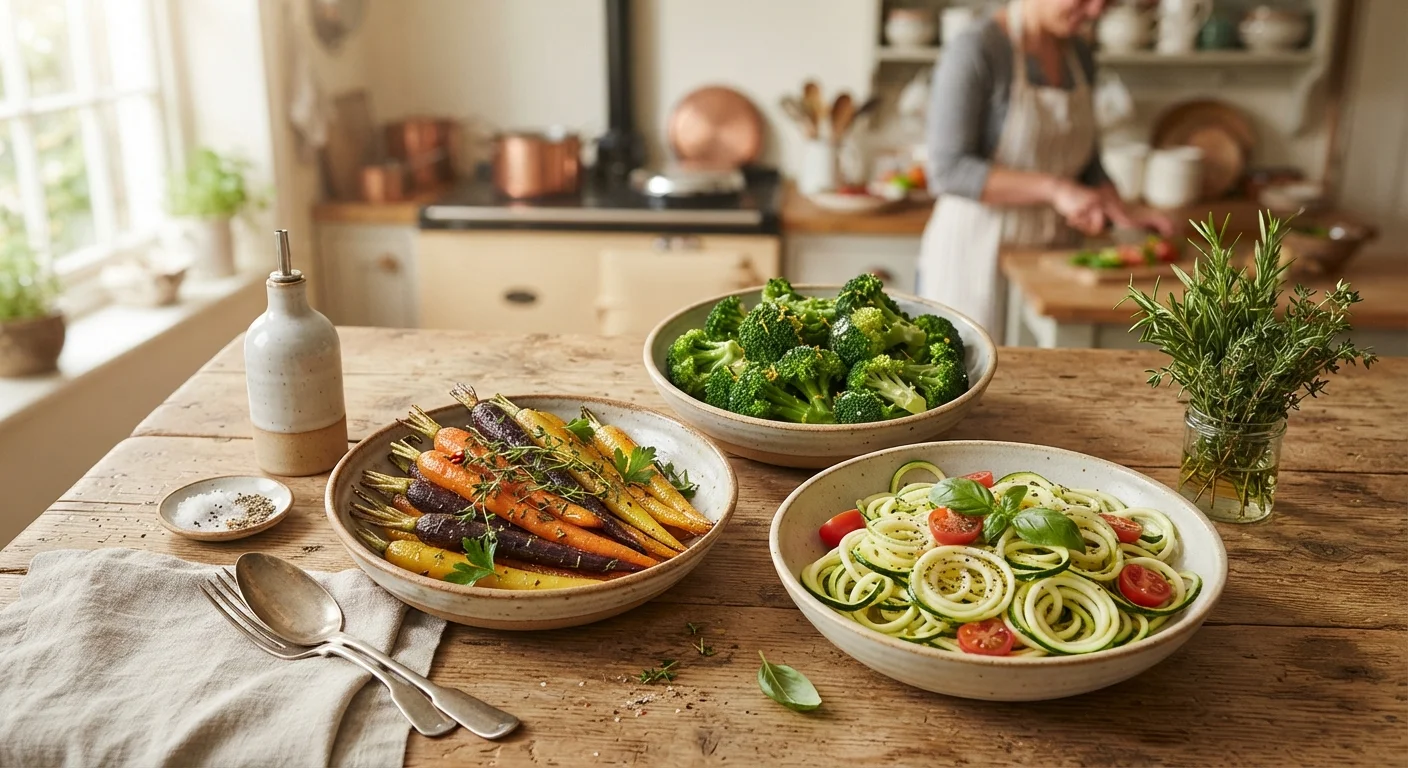
Roasting vegetables at higher heat triggers the Maillard reaction - the same browning process that makes bread crusts and seared meat so appealing. This process reduces bitterness and produces naturally sweet, caramelized edges that most children find far more appealing than the sulfurous smell and soft texture of boiled vegetables. Broccoli, cauliflower, carrots, and Brussels sprouts tend to be among the biggest beneficiaries of this technique.
A light coating of oil and a hot oven (typically around 400-425°F) for 20-25 minutes can turn a rejected vegetable into something genuinely crave-worthy for many kids.
Roasting reduces bitterness and creates naturally sweet caramelized edges most children find far more appealing.
Cut Vegetables Into Fun or Familiar Shapes
Visual presentation has a documented effect on children's food acceptance. Research in pediatric feeding has found that novel shapes - coins, sticks, stars - can increase a child's willingness to try a vegetable they might otherwise ignore. This is not just a gimmick: reducing perceived unfamiliarity lowers the threshold for a first taste.
Spiralizing zucchini into noodles, cutting cucumbers into rounds, or using a crinkle cutter on carrots doesn't change the nutrition, but it can meaningfully change a child's first response.
Novel shapes reduce perceived unfamiliarity and can meaningfully lower a child's resistance to trying vegetables.
Blend Vegetables Into Familiar Sauces and Dishes
Incorporating pureed or finely grated vegetables into pasta sauce, soups, or casseroles is a practical way to increase vegetable intake without confrontation. Butternut squash blends smoothly into mac and cheese sauce; finely grated zucchini practically disappears in meatballs or baked goods; spinach adds nutrition to smoothies with minimal flavor impact.
A note of balance: most dietitians suggest pairing this strategy with ongoing exposure to visible vegetables rather than relying solely on concealment, so that children gradually learn to recognize and accept whole vegetables too.
Blending vegetables into sauces works best alongside - not instead of - ongoing exposure to recognizable whole vegetables.
Offer Dips and Sauces as a Bridge
Pairing vegetables with a preferred dip - hummus, yogurt-based dips, mild guacamole, or a favorite dressing - can lower the barrier to that critical first bite. The familiar flavor of the dip provides a form of sensory reassurance, which researchers refer to as flavor-flavor conditioning. Over time, the positive association can extend to the vegetable itself.
This is a recognized strategy in division of responsibility feeding models, which separate what food is offered (the parent's role) from how much is eaten (the child's role).
Pairing vegetables with a familiar dip uses flavor-flavor conditioning to build positive associations over time.
Serve Vegetables When Hunger Is Highest
Timing matters. A child who arrives at the dinner table already snacking is less likely to engage with a new or disliked vegetable. Research on appetite and food acceptance suggests that vegetables served as a first course - before the main meal, when children are hungriest - are consumed in greater quantities than when served alongside competing foods.
A small plate of cut vegetables placed on the table while the rest of dinner is being prepared is a low-effort way to capitalize on this window.
Vegetables served before the main meal, when hunger is at its peak, are consistently eaten in greater amounts.
Let Children Participate in Preparation
Involving children in washing, tearing, stirring, or assembling vegetables gives them a sense of ownership over the food. Studies in child feeding have found that children who participate in preparing a food show higher willingness to taste it. Even young children can rinse cherry tomatoes, tear lettuce, or use child-safe tools to mix a salad.
This approach also quietly builds food literacy - an understanding of where food comes from and how it's prepared - which supports longer-term healthy eating patterns. For more on that broader goal, see our article on raising nutritionally aware kids.
Children who help prepare food consistently show greater willingness to taste it at the table.
Respect Texture Preferences - Then Gradually Expand
Texture is often the real issue when a child claims to dislike a vegetable. Some children strongly prefer crunchy textures; others prefer soft. Rather than overriding this preference, meet it first. If a child rejects mushy cooked peas, try frozen peas served slightly thawed - a firmer, almost snackable texture many kids enjoy. From there, gradual variation can expand acceptance over time.
Understanding your child's texture sensitivities - rather than assuming preference is purely about taste - can guide more effective preparation choices. If texture aversions are severe or affecting overall nutrition, a pediatric occupational therapist or dietitian can offer tailored support.
Texture is often the real barrier - matching the child's preferred texture first makes gradual expansion far more achievable.
Building Lasting Vegetable Habits
Preparation techniques lay the groundwork, but consistency matters just as much. Research consistently shows that children may need to encounter a new food many times - sometimes a dozen or more - before accepting it. Serving vegetables regularly, without pressure or reward attached, remains one of the most evidence-supported approaches pediatric dietitians recommend.
Make Repeated Exposure Low-Stakes
Serve a new or previously rejected vegetable alongside foods your child already enjoys, without commentary or pressure. Research supports the idea that neutral, repeated exposure - rather than rewards or negotiations - is more likely to build genuine acceptance over time. Keep portions small and expectations flexible.
Connecting vegetable eating to a child's growing understanding of nutrition can also help. Our broader resource on raising nutritionally aware kids offers an age-by-age framework for building that foundation. For families exploring more plant-forward meals, it's also worth reading about plant-based eating nutritional trade-offs to ensure the full range of nutrients is covered.
This article is for general informational and educational purposes only and does not constitute medical or dietary advice. For concerns about your child's nutrition or eating habits, please consult a qualified healthcare professional or registered dietitian.